Accounting for Reality in Impact Measurement
by
Akshay Roongta
There's a persistent tension in impact measurement that we’ve been thinking about for a while. Over the six years of building Dots and working with various orgs on strategy and design, we've watched some programs contort themselves to fit into narrow indicators...The logic seems to be: if we can isolate some variables and measure them, we can prove success/impact, understand failure..
But this approach keeps bumping up against something fundamental: reality is messier than these frameworks allow. I found unexpected clarity on this recently in a book on historiography..

Wanderer above the Sea of Fog by Caspar David French is on the cover of The Landscape of History, and is used as an allegory by Gaddis to talk about various themes in the journey of a historian working on a subject
I’ve been reading John Lewis Gaddis’ ‘Landscape of History’ recently, which is a great guide for anyone curious about how historians navigate various tensions as they research, study and write history.
In the book, Gaddis explores how the practice of history places itself amongst the natural sciences (physics, biology etc.) and the social sciences (economics, geography etc). One chapter in particular offers clues to the social sector, in how we think about the messiness that reality brings to impact measurement.
Gaddis asserts that there are two ways of understanding causation. The first is a reductionist view, that assumes one can break reality down almost like a mathematical equation to isolate the effects that a variable has on the outcome. In this way, you can also rank the causes in a hierarchy.
The ecological perspective on the other hand, says that all causal variables have antecedents, one thing causes another, causes another, and this ‘ecology’ of variables creates an outcome, which is itself a cause in a future outcome or many.
What struck me most was Gaddis’ observation that while the natural sciences have moved on from a reductionist view (he shares the examples of the study of quantum physics, and epigenetics) to a more ecological view, the social sciences seem to still be stuck trying to prove legitimacy through a focus on ‘hard’ numbers, and independent variables alone.
One line in particular that stood out to me from the book was: "The reason, I argued, is that too many social scientists, in their efforts to specify independent variables, have lost sight of a basic requirement of theory, which is to account for reality."
This is what we’ve been arguing for the last 6+ years:
Accounting for reality’ can’t happen with numbers alone; it has to bring in the views of communities, frontline workers, collaborators in all its messiness, and as it evolves while your program runs.. And then well beyond.
The beauty is to do it through stories, interviews, impressions, meeting transcripts and so much more! And when you bring these together with various numbers, you can then begin to form an ‘ecological view’ of your program, and grasp the landscape of the impact your program has had, and will be having.
What’s truly heartening is some of the conversations I’ve had over the past year. I see more and more groups working on landscape-level interventions in truly collaborative, and multidisciplinary collectives.
As their work gets off the ground, they’re now grappling with how to understand what’s happening, what’s working, what are the variables, without forcing it into frameworks that flatten complexity. And they’re willing to take more risks to build an ecological view of their programs.
These small shifts that I’m seeing give me hope that we might just make the right moves yet, step away from just fancy statistics and towards approaches that in the words of Gaddis, ‘account for reality’.
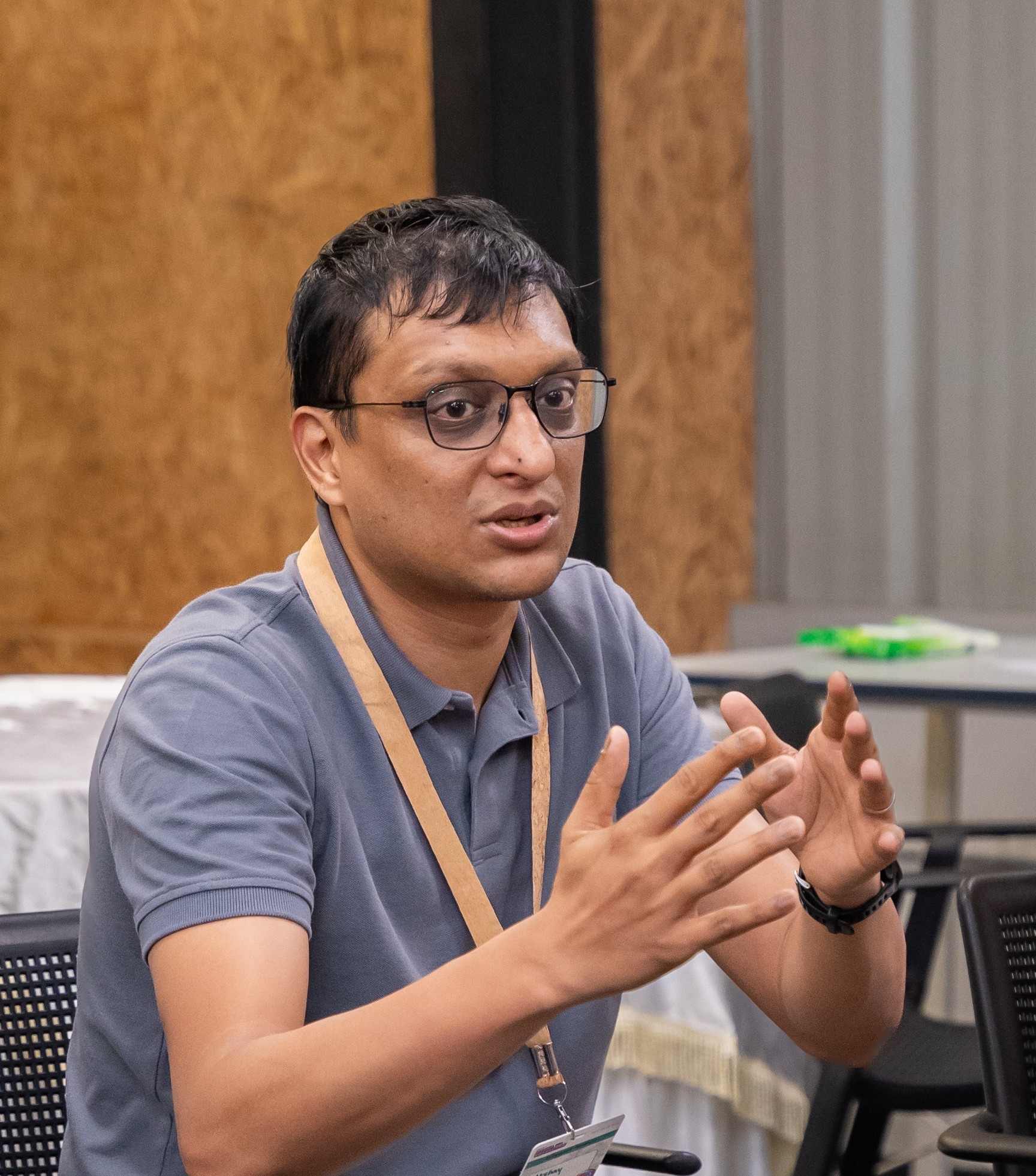
Akshay Roongta
Co-Founder Dots by Ooloi Labs
With over a decade of experience working across WASH, public health, financial inclusion, agriculture, and education, Akshay brings a deep understanding of how complex, ground-level realities can inform better decisions and systems. Before co-founding Dots, Akshay worked with a range of nonprofits, networks, and mission-driven businesses to enable collaboration, learning, and long-term change. His work blends systems thinking, participatory research, and product design to create tools that help teams work meaningfully with qualitative data. He believes that the most valuable insights often lie in lived experience, and that good technology should help uncover and act on those insights without losing their nuance.
Qualitative Methods and Ripple Effects
The author reflects on how qualitative methods surface forms of impact that conventional evaluations overlook. Through firsthand accounts from disaster reporting platforms in Indonesia and the Philippines, she explores how changes in confidence, agency, and collective action unfold over time. It invites readers to rethink what we measure, why it matters, and how different questions can fundamentally change what we understand as impact.
Bianca Shah
What Hans Rosling Taught Me About Numbers on Dashboards
We often place a lot of trust in the biggest number on a dashboard. In this piece, Akshay reflects on why standalone metrics can sometimes feel reassuring but often fall short when it comes to real decision-making, and why comparison and context matter more than we think.
Akshay Roongta